B2B Steel Container Homes For Sale
- Cammi House
- 2026-09-22
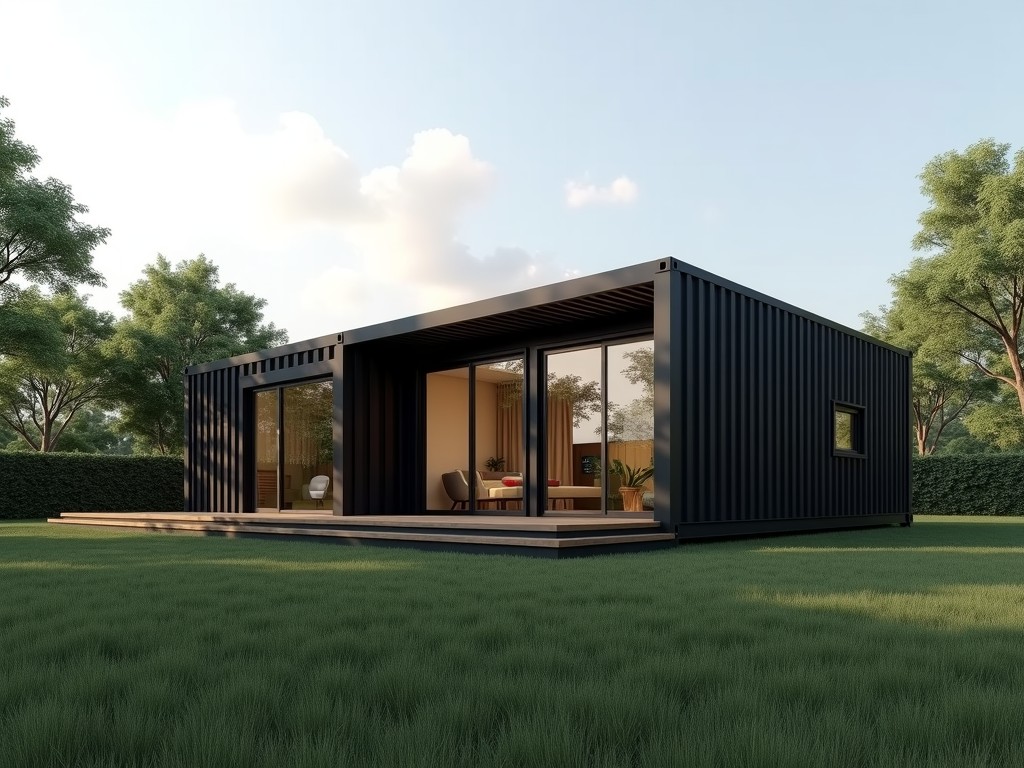
Industrial buyers increasingly consider modular steel container homes as a rapid‑deployment solution for site offices, worker accommodation, and remote‑facility housing. These units are built from
B2B Steel Container Homes for Sale
Industrial buyers increasingly consider modular steel container homes as a rapid‑deployment solution for site offices, worker accommodation, and remote‑facility housing. These units are built from ISO‑standard shipping containers that are structurally reinforced, insulated, and finished to meet building codes for temporary or semi‑permanent use.
Structural Design and Materials
The primary load‑bearing element is the original corrugated steel wall, typically 8 mm thick, which retains its ISO‑rated stacking strength of up to 192 kN per corner post. Additional longitudinal stiffeners are welded at the top and bottom rails to increase bending resistance when containers are stacked or subjected to wind loads. Corner castings are left intact to allow standard twist‑lock handling equipment.
Thermal and Acoustic Performance
Insulation is applied to the interior faces of the walls, roof, and floor using mineral wool boards with a nominal density of 120 kg/m³, delivering an R‑value of approximately 3.5 m²·K/W for a 50 mm thickness. A continuous vapor barrier of polyethylene sheeting (0.15 mm) is installed beneath the insulation to control condensation. Interior wall linings are typically 12 mm gypsum board, providing a sound transmission class (STC) improvement of roughly 5 dB over the bare steel surface.
Standard Dimensions and Configurations
| Configuration | Length (m) | Width (m) | Height (m) | Typical Use |
|---|---|---|---|---|
| Single 20‑ft office | 6.06 | 2.44 | 2.59 | Site office, meeting room |
| Single 40‑ft dormitory | 12.19 | 2.44 | 2.59 | Worker lodging, 8‑person rooms |
| 40‑ft combined unit | 12.19 | 2.44 | 2.59 | Office + accommodation split |
| Triple 20‑ft clinic | 6.06 × 3 | 2.44 | 2.59 | Medical triage, pharmacy |
Customization Options
- Exterior cladding: corrugated steel panels, powder‑coated aluminum composite, or fiber‑cement siding
- Interior finishes: plywood sheathing, gypsum board, PVC wall panels, or antimicrobial coating
- HVAC: wall‑mounted split‑system, rooftop packaged unit, or heat‑recovery ventilator
- Electrical: conduit‑run lighting, power outlets, data ports, and optional solar‑ready roof mounts
- Openings: sliding steel doors, personnel doors, double‑glazed windows, or roll‑up shutters
Applications in Industrial Sectors
In mining operations, container homes provide secure, relocatable quarters that can be moved as the pit advances, reducing the need for permanent civil works. For logistics hubs, they serve as on‑site customs inspection offices, benefiting from the inherent security of the steel shell and the ability to install reinforced locking mechanisms. In renewable‑energy projects, such as wind farms, the units function as control rooms that withstand high wind loads and salt‑spray environments when coated with appropriate marine‑grade paint.
Quality Assurance and Testing
Each unit undergoes a dimensional verification against ISO 668 tolerances, ensuring corner casting alignment within ±2 mm. Insulation thickness is probed at five points per panel, with acceptance criteria of ±5 mm of the specified value. Air leakage is measured using a blower door test; a target of less than 3 ACH@50Pa is required for conditioned spaces. Final coating adhesion is assessed via cross‑hatch tape testing per ASTM D3359, with a minimum rating of 4B.
Frequently Asked Questions
A: Yes, containers can be cut and welded to produce non‑standard lengths, though structural re‑certification is required for load‑bearing applications.
A: Required details include intended use, required interior finish, climate conditions, and any specific equipment (HVAC, power) to be installed.
A: Mineral wool, expanded polystyrene, and polyurethane panels are offered, each with different R‑values and fire ratings.
A: Units are wrapped in waterproof shrink film, fitted with corner protectors, and secured on flat‑rack containers using lashing straps that meet ISO 1496‑3 standards.